Is Organic Formula Actually Worth It?
You’ve googled it, scrolled the Reddit threads and maybe even asked AI. The paradox is that ‘organic’ now appears on everything from nappies to dummies to formula, which makes it so much harder, not easier, to know when it actually means something.
Here’s our promise upfront: this blog won’t sell you on organic. We’ll explain what the label means and what the research says, then let you decide. Maybe you’re weighing up organic vs non-organic baby formula or just want to read a label properly. Whatever your reason for being here, the real question – is organic baby formula worth it – deserves a straight answer.
What ‘Certified Organic’ Actually Means On A Formula
On its own, the word ‘organic’ carries no legal weight in Australia. Without an accreditation body behind it, a brand can print ‘organic’ on a tin with no independent proof, which is worth knowing before you compare prices.
The most recognised standard here is Australian Certified Organic (ACO). To earn the little ACO logo, a product has to meet a demanding set of rules, which includes:
-
No synthetic pesticides.
-
No synthetic fertilisers.
-
No GMOs.
-
Strict farm auditing.
-
Full supply-chain traceability from paddock to tin.
And a certified organic formula isn’t just the finished powder – the source milk, the pasture the cows graze and every other ingredient have to meet the standard too. We’ve got more helpful information on what it takes to be certified organic.
So the takeaway is less about “Which label do I buy?” and more “How do I read it?”. A named certification body – either ACO or a recognised international equivalent – means the claim has been independently verified. ‘Organic’ on its own, with no body behind it, hasn’t. That’s the difference between a genuine Australian Certified Organic formula and mere marketing.
Why Grass-Fed Is A Separate And Important Question
Did you know that organic and grass-fed aren’t the same thing? A formula can be fully ACO certified while the cows still spend much of the year on grain or mixed feed. What they eat is a separate requirement from how the farm is certified.
And it actually changes the milk. Research shows that 365-day grass-fed dairy is richer in omega-3 fatty acids, vitamin E, beta-carotene and CLA (conjugated linoleic acid) than grain-fed or mixed-feed dairy. Those aren’t incidental extras; all three support brain development, immune function and cell-membrane integrity, which are the building blocks of early development.
If you’re comparing a grass-fed baby formula against a standard one, the claim to look for is ‘365-day grass-fed’. Softer phrases like ‘pasture raised’ or ‘outdoor access’ sound similar but are weaker standards. A true grass-fed cow’s milk formula from farm to tin will tell you how long, not just that the cows saw a paddock once.
What The Research Says About Pesticides, GMOs, And A Developing Gut
A developing infant’s gut is a lot more complex than an adult’s. It’s more permeable, actively building its microbiome, which means it’s more vulnerable to chemical disruption than at almost any other life stage. The first 1,000 days carry a weight that’s hard to overstate. It’s worth treating this as a baby gut development formula question, not just a nutrition-panel one.
In terms of pesticides, research shows organic formulas carry lower levels of synthetic pesticide residues than conventional ones. For parents thinking about pesticides in baby formula, that’s a reason why some choose to minimise any level of exposure.
Then we come to GMOs, and the long-term research is still maturing. Some studies suggest chronic low-level exposure could influence gut microbiome health and physical development, but the science isn’t settled. For cautious families, a GMO-free baby formula backed by genuine certification draws a clear line, and it’s part of the reason why some look for a non-GMO baby formula Australia makes and verifies locally.
Bottom line? Conventional formula is still regulated, nutritionally complete and used safely by millions of families. The organic choice is about reducing exposure, not a verdict of ‘dangerous versus safe’. That’s a meaningful distinction, and it’s hopefully an important one for your peace of mind.
So, Is Organic Formula Worth It? An Honest Answer
Is organic baby formula worth it for everyone? No. Not every family needs organic formula, and the nutritional baseline of standard formula is sound. That’s the honest starting point.
But if your question goes beyond the nutrition panel – the source milk, the farming system, what the cows ate, environmental sustainability, the pesticide-residue situation – then certified organic, independently verified, is the only version of that claim that’s actually been checked. Grass-fed on top is what makes the milk measurably different.
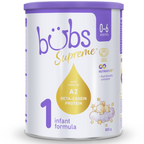
And this is where the Bubs Organic Grass Fed formula range comes into the picture. Our Organic Grass Fed range is ACO certified, the cows graze a full 365 days a year, and it’s been independently tested for more than 400 contaminants through the Clean Label Project.
What To Look For On The Label
If you take away just one strategy from this blog, make it this checklist. Next time you’re comparing a clean-label baby formula or weighing up the best organic infant formulas Australia has to offer, ask yourself a few questions:
-
Does it name the certification body? (ACO or an international equivalent – not just ‘organic’.)
-
Does it specify grass-fed, and for how long? (365-day is the best claim.)
-
Has it been independently tested for contaminants? (Clean Label Project is the benchmark.)
-
Is it Australian-made?
That’s how you can tell a credible organic baby formula in Australia apart from a label hoping you won’t look too closely.
Ultimately, it doesn’t matter which camp you end up in. If you decide organic is worth it, you now have a framework for choosing well instead of guessing. If you decide it isn’t necessary, you have the information to feel confident in that, too.
The point is that a certified organic formula, when crafted with care – grass-fed and independently tested – is a meaningful choice. ‘Organic’ as a marketing word, without those credentials, isn’t.
If you’d like to see what the proper version looks like in practice, the Bubs Organic Grass Fed range is a good place to start.