Explore the Science: Oligosaccharides in Milk
What Are HMOs?
If you’re finding the world of formulas confusing, you’re definitely not alone. Navigating feeding choices as a new parent is never easy, especially when there are science-y terms like HMOs and GMOs floating around.
HMOs, or human milk oligosaccharides, are a special kind of carbohydrate unique to human breast milk. Studies have linked HMOs to healthy growth and development in infants, as well as promoting a healthy gut microbiome and assisting immune system development.
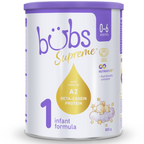
In this article, we’ll explore the differences between HMOs in human milk, and the GMOs in Bubs Easy-digest Goat Milk Formula, breaking down the science in a way that’s easy for you to explore and understand.
How HMOs Support Infant Gut Health
For breastfed infants, Human Milk Oligosaccharides (HMOs) play an important role in maintaining a healthy gut microbiome. We often consider milk as simply ‘food’ for babies, but the HMOs found in breastmilk aren’t actually digested - they pass through the gut undigested, where they have a prebiotic effect.
You’ve probably heard of probiotics before, often called “good” or “friendly” bacteria, which help to maintain the natural balance in the microbiome. Well, prebiotics act as “food” for probiotics, essentially fuelling the beneficial bacteria in your baby’s gut. The cool thing about the prebiotic nature of HMOs is that research has found it assists in immune system development and the strengthening of the barrier function of the gut.
By feeding helpful bacteria, HMOs help create a balanced gut environment and support the gut’s natural barrier, making it harder for harmful bacteria to attach to the gut lining. HMOs support your baby’s immune system development and help to protect against illness during early life.
What Are Goat Milk Oligosaccharides (GMOs)?
While HMOs are unique to humans, goat milk contains its own version called goat milk oligosaccharides (GMOs). Studies have found that GMOs also provide a prebiotic effect, helping to feed the good bacteria in your baby’s gut, much like HMOs do.
What makes this especially interesting for parents is that GMOs are structurally more similar to HMOs than the oligosaccharides found in cow’s milk. Goat milk naturally contains more milk oligosaccharides than cow milk, too, with higher concentrations and a greater variety overall. It’s also why many parents consider Bubs Easy-digest Goat Milk Formula a gentler option than cow’s milk, particularly when it comes to supporting digestion and gut comfort in growing babies.
Digestion: Goat Milk vs Cow Milk
We’ve learned that HMOs and GMOs share some pretty good gut stuff, but the natural prebiotics in goat milk aren’t the only reason parents love it for their babies. Goat milk is also naturally easier to digest.
One of the top benefits of goat milk formula is that it contains A2 beta-casein protein, which forms a softer curd in the stomach. This curd breaks down more easily, similar to the easy-to-digest nature of breast milk. Many parents notice a difference when it comes to comfort, gas, or fussiness, as less strain is put on their baby’s developing digestive system when switching to goat milk formula.
What This Means For Parents
While goat milk oligosaccharides (GMOs) aren’t identical to those found in human milk (HMOs), there is strong evidence that GMO formula plays a positive role in overall growth and digestion, particularly when it comes to your baby’s gut health and immune system development. Combined with goat milk’s A2 protein and its naturally easier digestion, it’s easy to see why Bubs Easy-digest Goat Milk Formula is loved by parents and sensitive tummies, helping to support the growth of your little one without compromising on gut health.